Is Stockity Legal and Safe?
This overview covers Stockity’s security framework, verification processes, fund management, and technical infrastructure to help traders evaluate the platform’s reliability and overall trading environment.
Stockity’s Registration and Operating Jurisdiction
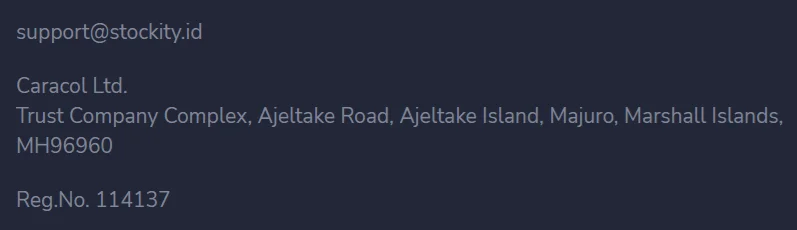
Stockity is operated by Caracol Ltd., a company registered in the Marshall Islands (Reg. No. 114137), and began offering trading services in 2022. The Marshall Islands is a known international business hub where many fintech firms are incorporated.
While this jurisdiction doesn’t offer the same regulatory structures as the EU or Australia, it allows platforms like Stockity to innovate quickly and offer flexible conditions. For traders, this means an opportunity to access global markets without the typical onboarding restrictions found on highly regulated platforms.
The company also references its affiliation with “Trusted by Traders (TBT),” which it describes as an independent oversight initiative, though it’s not equivalent to regulation by a governmental financial authority.

Technical Security Features and Data Protection
Stockity follows standard practices to protect its users’ accounts and personal data. According to the platform, key technical features include:
- SSL encryption for secure data transmission
- Two-factor authentication (2FA) for login protection
- Anti-Money Laundering (AML) procedures
- Know Your Customer (KYC) identity verification
These measures are designed to minimize unauthorized access and ensure compliance with international anti-fraud frameworks. Users are encouraged to activate 2FA and use secure passwords to strengthen account safety.

Account Verification and User Identification
To comply with financial industry norms and to ensure secure transactions, Stockity requires account holders to verify their identity. The process typically involves:
- A government-issued photo ID
- A proof of address document (e.g., utility bill or bank statement)
- Additional documentation for higher-tier accounts or large transactions
Though sometimes seen as an extra step, KYC helps prevent fraudulent activity and adds a layer of security for all users.
Fund Management and Withdrawals
Stockity supports a variety of deposit and withdrawal methods, including bank cards, cryptocurrencies, and e-wallets. The platform sets withdrawal timeframes based on account status:
- Standard: up to 3 business days
- Gold: within 24 hours
- VIP/Platinum: within 4 hours
Users are required to complete identity verification prior to their first withdrawal, which is a standard industry practice.
While the company doesn’t publicly detail whether funds are held in segregated accounts, traders can minimize risk by using typical best practices: start with smaller deposits, verify withdrawal reliability early, and avoid leaving large balances on any trading platform.
Platform Security and Trading Infrastructure
Stockity offers a proprietary trading platform accessible via web and mobile apps. The interface supports high-speed execution for digital options and CFDs, with short-term expiration windows ranging from 5 seconds to 60 minutes.
Although the platform does not operate on third-party software like MetaTrader, proprietary platforms are common in the digital options space and allow companies to tailor the user experience. As with any trading app, users are advised to:
- Download only from official app stores
- Keep the app updated to benefit from security patches
- Avoid trading over public Wi-Fi without a VPN
- Use device-level protections like fingerprint or face unlock
Balancing Innovation and Risk
Unlike traditional brokers regulated by entities such as the FCA or CySEC, Stockity operates under a more flexible jurisdiction. This has both pros and cons. While it allows for more accessible onboarding and fewer restrictions for international traders, it also means users must take more personal responsibility for their risk management.
To provide context, here’s a general comparison:
| Security Feature | Stockity | Typical Regulated Broker |
| Regulatory Oversight | Registered offshore | Regulated by national authorities |
| Fund Segregation | Not publicly confirmed | Required |
| Insurance / Compensation | Not mentioned | Often covered by investor schemes |
| KYC/AML Procedures | Implemented | Mandatory |
| Dispute Resolution | Internal support team | Access to financial ombudsman |
For some traders, especially those comfortable with fintech platforms and digital wallets, these trade-offs may be acceptable.To provide context, here’s a general comparison.
Final Thoughts: Is Stockity Right for You?
Stockity provides a modern trading experience with fast execution, multiple deposit options, and accessible account tiers. It may appeal to users looking for streamlined onboarding and flexibility beyond traditional brokers.
That said, it’s important to understand the trade-offs. While Stockity offers key technical safeguards, it doesn’t operate under the same regulatory frameworks as major financial institutions. For many traders, that’s a calculated risk worth taking — especially with proper precautions and risk management.
As always, never invest more than you can afford to lose, and make sure your platform choice aligns with your personal comfort level and trading goals.
Sign Up and Get a Welcome Bonus
Sign up now and get a bonus on your first deposit! Any doubts? Then just test the platform on a free demo account.
* Risk Warning: Online trading may involve significant financial risks including the risk of losing all funds on your trading account. Please, estimate all the risks and get advice from an independent financial advisor before using Stockity services. We also recommend not to invest funds you can’t afford.